FACETS | OLD WORLD
The Blind Horse Restaurant and Winery bills itself as Wisconsin’s premier winery destination—a taste of Napa in Cedarburg. The building dates back to the 1800s and has hosted a variety of businesses over the decades, accruing a richness of character that the owners wanted to preserve through its renovation. However, much of the interior needed removing to meet modern building codes. So the team at Distinctive Design turned to Buechel’s Oiled Nubuck Siena veneers to help the reimagined space look as though it had outlasted generations. Skilled masons sought to give the space the character of an old-world wine cellar during installation, and guests frequently assume the stone has been there for more than a century. “The owners’ goal was to create an immersive experience—one that feels as though guests are stepping back in time,” says interior designer Angie Boettner. “Stone became a key part of that vision, lending the space a sense of authenticity and atmosphere.”
EXACT MATCH
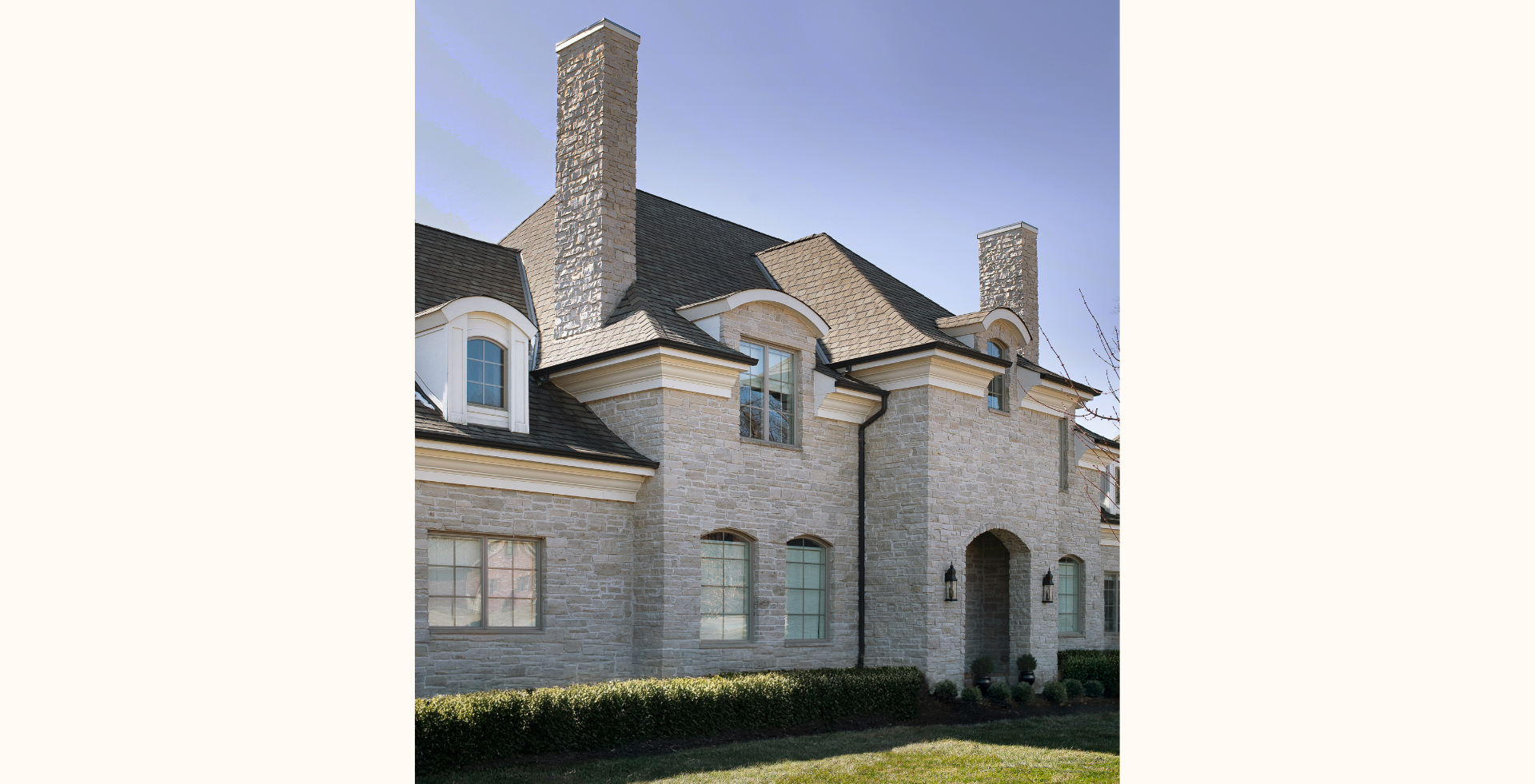
This home is located in Ellendale Farms, an upscale master-planned community surrounded by rolling hills and picturesque ponds near Crown Point, Indiana. Eric Van Vossen of Crown Brick and Supply, Inc. helped the homeowner choose its featured stone after she saw a bar display in their showroom. “The owner fell in love with the colors and wanted the exact same formula for her build,” he recalls. “Crazy how a 40-square-foot area turned into 8,000 square feet of building stone.” Van Vossen says the project called for a random ashlar pattern stone, and Buechel’s Fond du Lac Country Squire was the right fit because of its cool, timeless color range from light gray to slightly white. He also trusted Buechel’s high standards and proven longevity in the face of Midwest winters. “To this day, it is still visually stunning and fits with the trends,” says Van Vossen.
GOOD VIBES
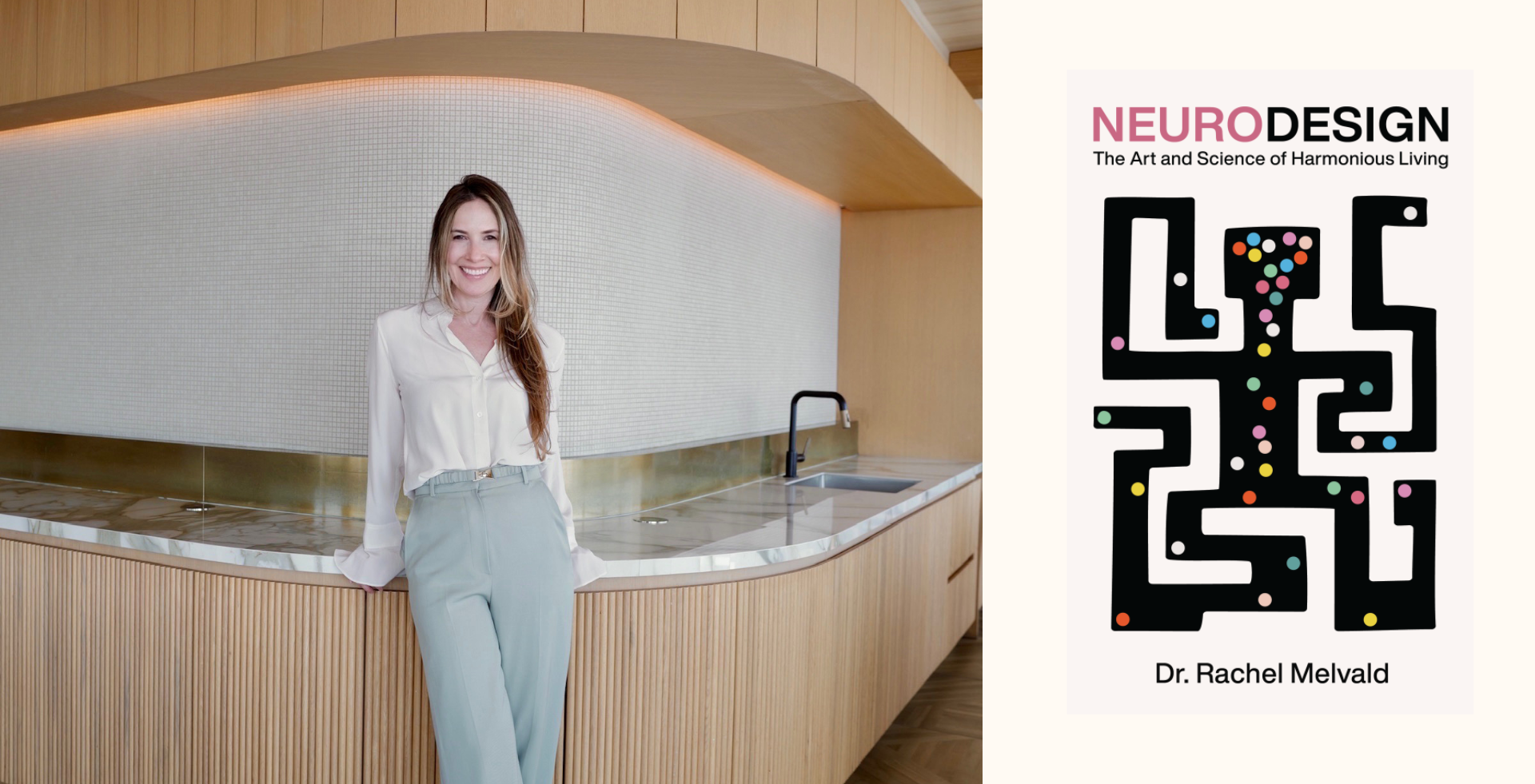
Rachel Melvald of Psychitecture is a therapist—and the author of Neurodesign: The Art and Science of Harmonious Living—whose work includes guidance in areas that might surprise, such as architecture and design. Much of this involves neuroaesthetics—a school of thought that offers insight into why certain spaces feel calming, grounding, or inspired while other spaces agitate us. “The brain is extraordinarily sensitive to pattern variation, depth, microtexture, natural materials containing fractal variation, and the subtle irregularity of it all,” Melvald explains. So how do our brains react to stone? “Stone signifies permanence, shelter, and geological time. That’s part of our evolutionary psychology,” says Melvald. Thus, thoughtfully integrating stone into spaces can offer a sense of stability and produce a calming response. The specific response may vary with the type of stone. “The brain prefers complexity within coherence—variation that is ordered, not chaotic,” she adds. “Bold veining can feel dynamic and dramatic. Softer tonal variations often feel soothing.” Our brains may even register the quality of the installation. “A skilled mason is able to create continuous rhythm and precision that communicates safety and competence,” Melvald notes, “so that’s psychologically reassuring.” Melvald hopes that sharing this knowledge will help people consider design beyond decoration—as a force that can improve mental health, relationships, and cognitive function. This can include quantifying responses one might casually think of as mere passing feelings. “Oftentimes when you walk into a space, you might say there’s a good vibe,” says Melvald. “Psychitecture unpacks the reason for that.” Learn more about these ideas at psychitecture.com.

SLIM SHADY
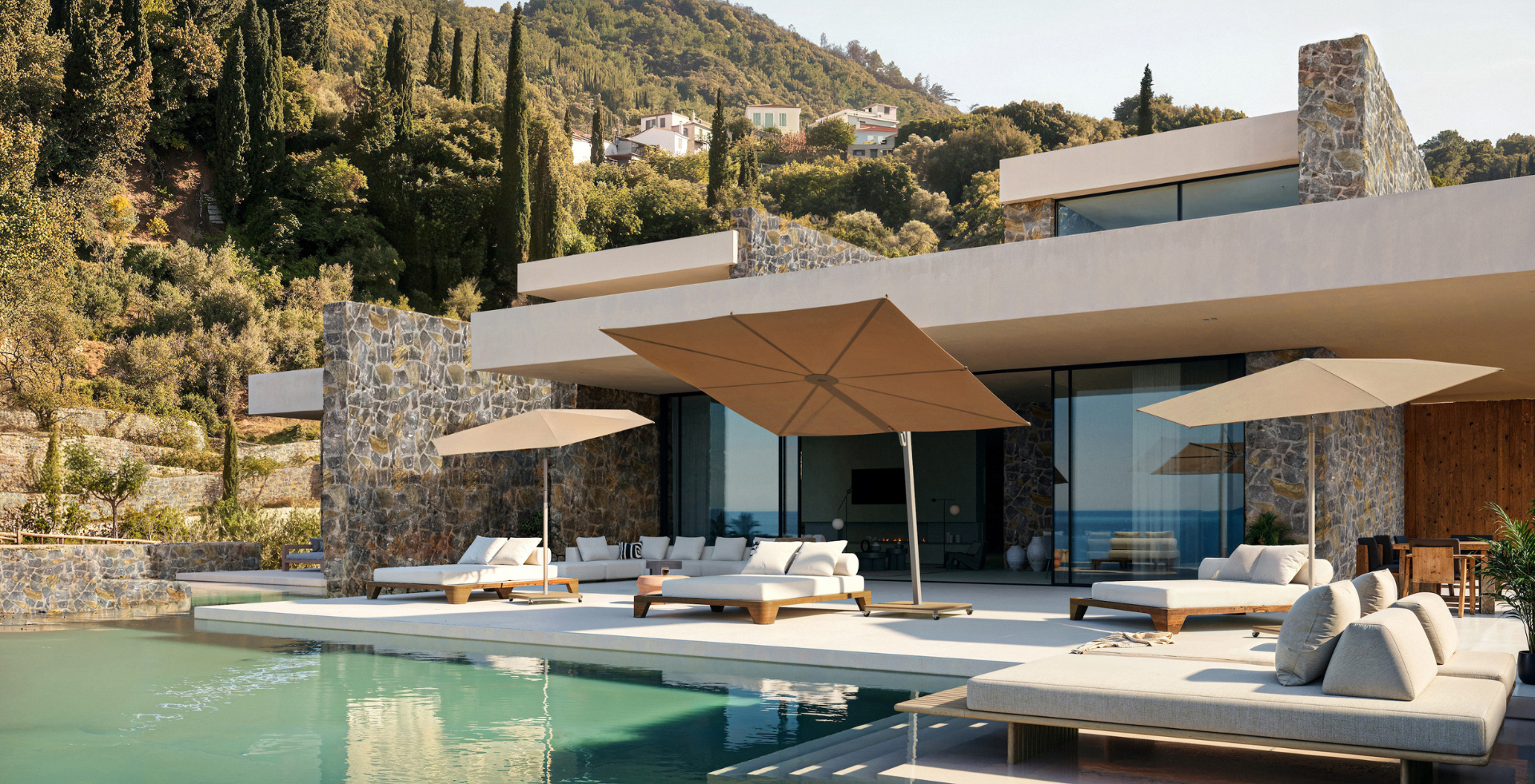
The Versa PX parasol, designed by Dirk Wynants for Umbrosa, is cantilevered for maximum versatility, and has a modern, streamlined profile, making it a welcome addition to any outdoor space. PX stands for Personal Experience: Choose your shape (square or round), and customize the canopy, frame, and stand colors. Crafted in Belgium, the Versa blends sun protection with an avant-garde, yet understated silhouette, allowing it to look at home in modern and contemporary environments, as well as in the context of a more traditional space. It’s available through Hundred Mile Outdoor and other retailers. Featured: Buechel’s Antique Black Webwall.
NATURAL RETREAT
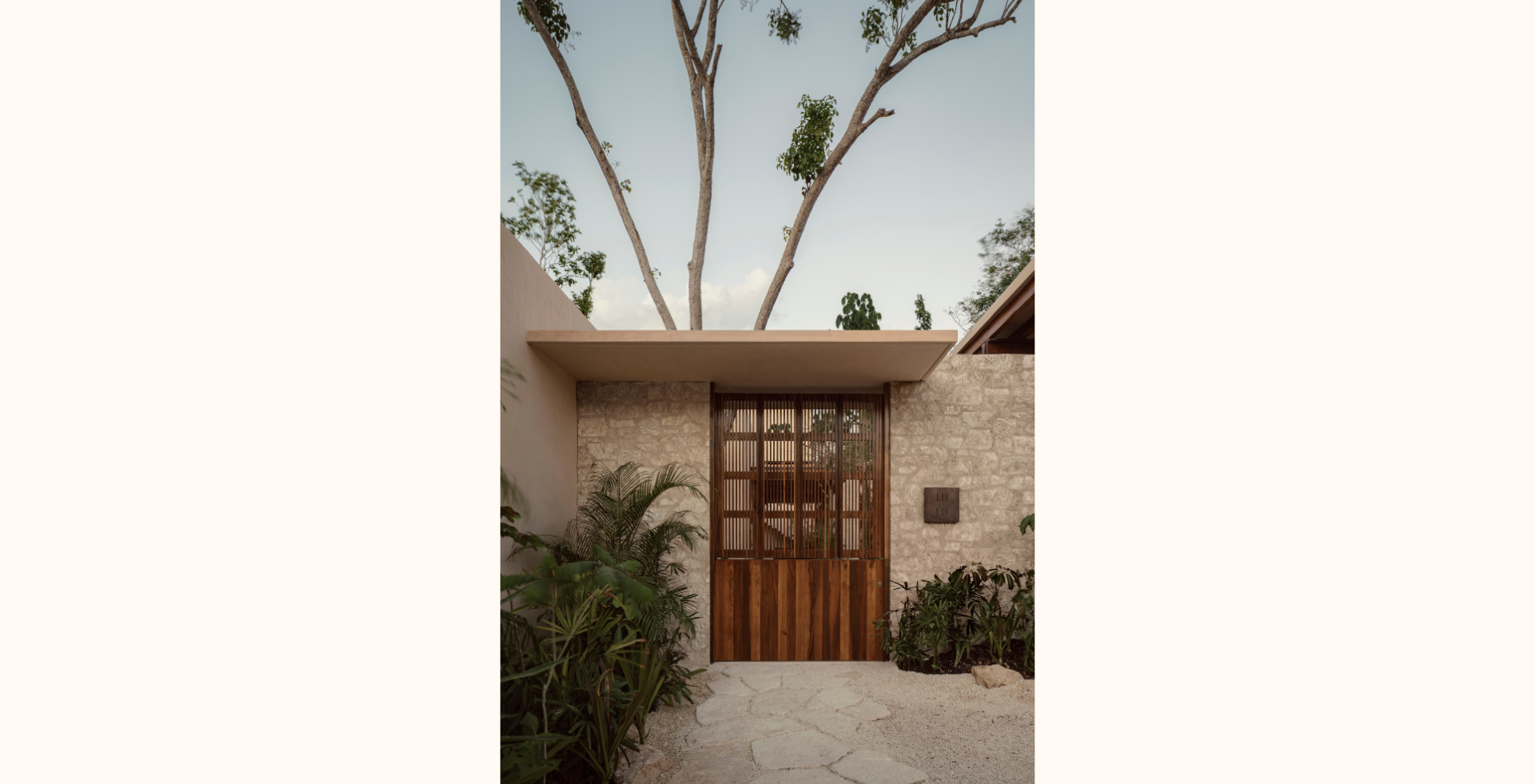
Hotel Naboa sits between the Caribbean Sea and the jungle in Tulum, Mexico. Designed by Jaque Studio—with interiors by Studio Wenden and landscape architecture from Hugo Sánchez Paisaje—the property weaves together framed views and open-air structures to create a serene, contemporary retreat. The buildings are crafted from local materials, including wood, travertine, stone, and chukum—a natural and waterproof stucco technique invented by the Mayans and made by mixing cement with the resin of the Chukum tree, which is native to the Yucatan Peninsula. Naboa’s vision emerges from a collective effort in which architecture, interiors, and landscape align to serve a singular idea: offering space defined by quiet simplicity and a deep connection to Tulum’s tropical climate. Featured: Buechel’s Jute Cloth Siena.
OLD SOUL
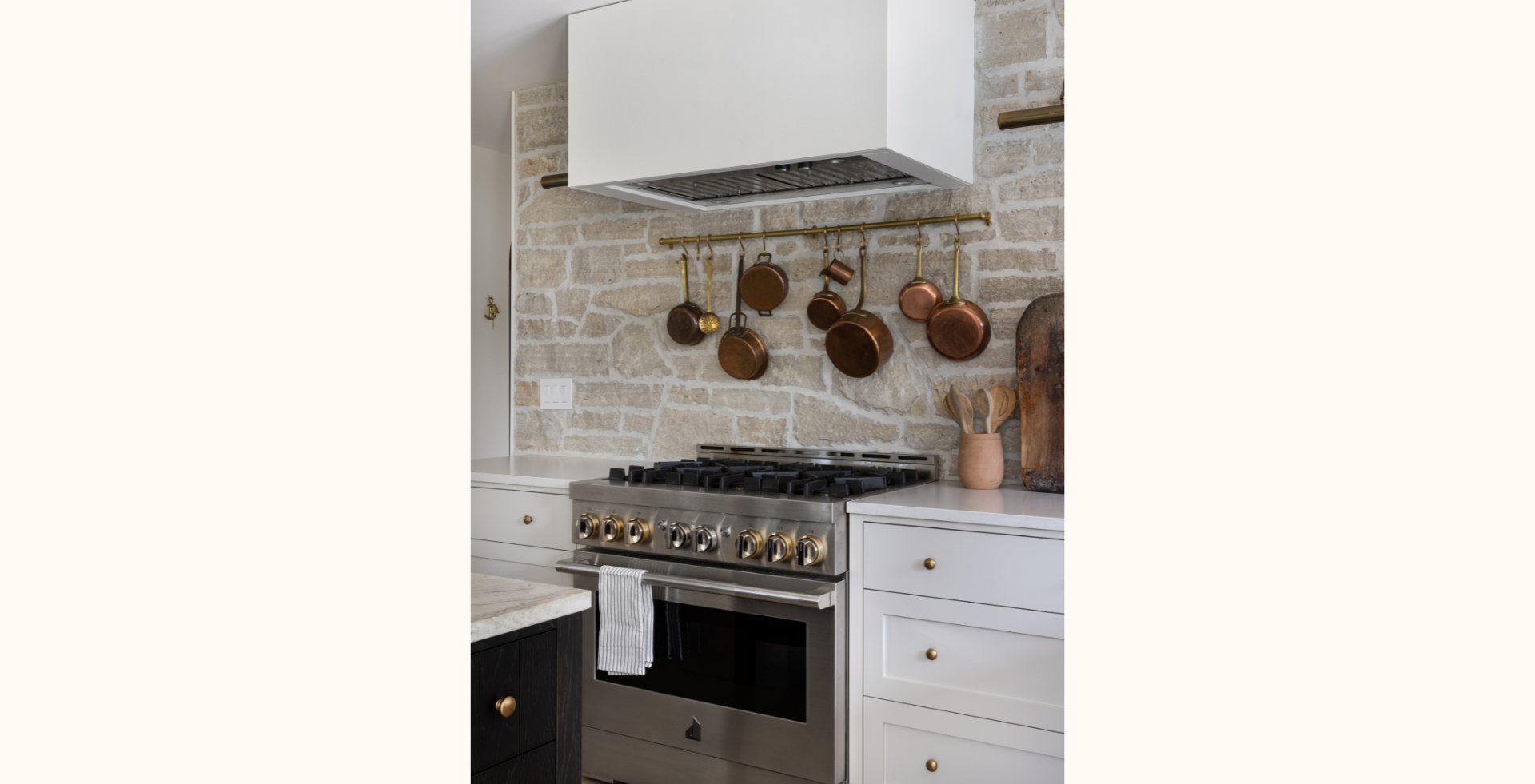
Andy Friesen, principal designer and founder of Su Casa Design, had definite ideas when it came to shaping his own kitchen. “I wanted it to be refined, but also old-world and rustic, like an English kitchen. I wanted modern conveniences, but for it to also have some old soul,” says Friesen. He turned to a custom blend of Fond du Lac Country Squire and Fond du Lac Webwall stone that stands out. “The first thing anyone notices in our kitchen is the stone wall. I took off the upper cabinetry because I wanted the stone to do the talking,” he adds. He particularly loves how the stone—which he used throughout the home—looks with the lights on in the evening: “It cascades down the rock: texture, warmth, rustic edge.