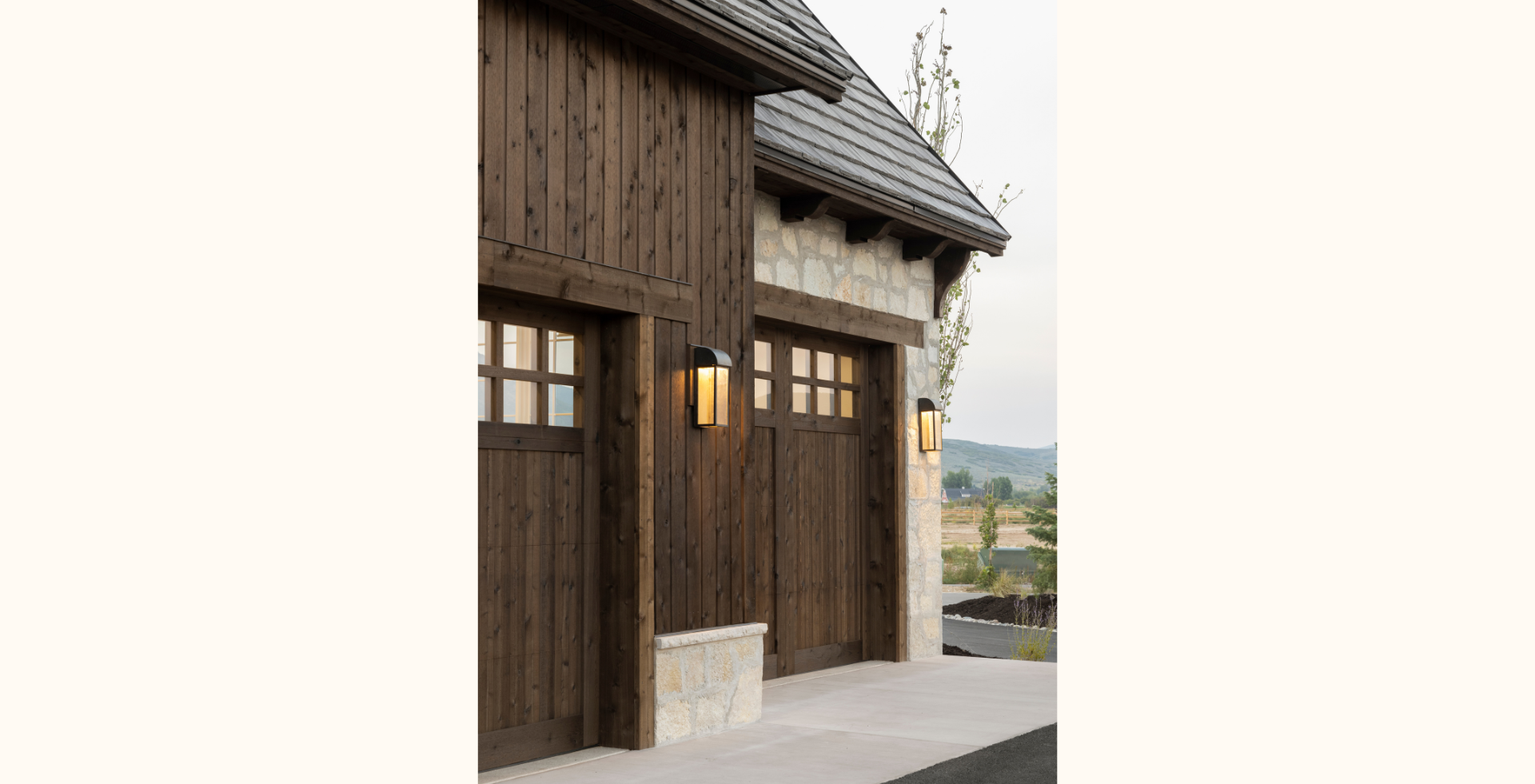
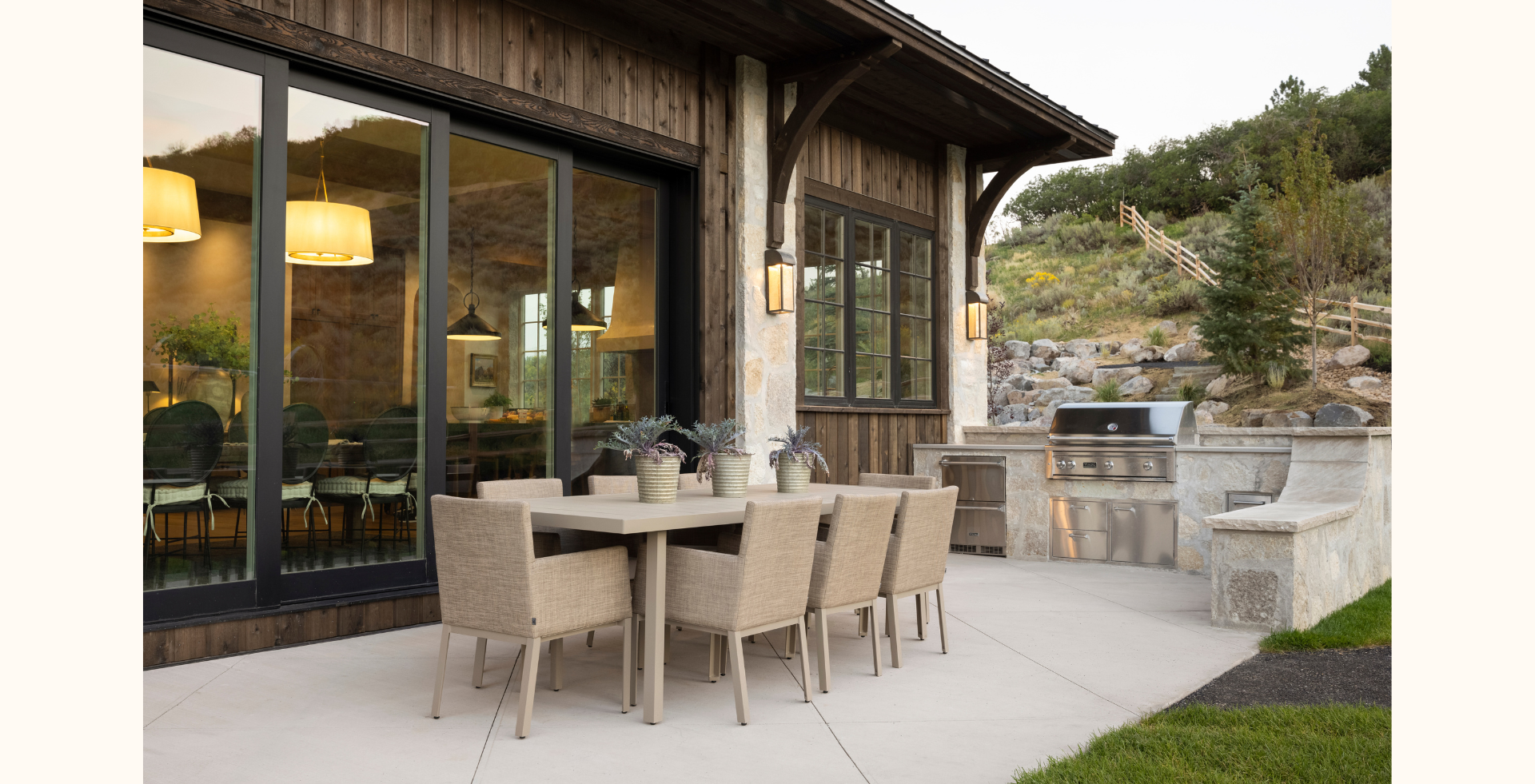
When people say they’re looking for a home with character, one assumes they mean the house should be old, timeworn—maybe a little creaky. But designer Tonya Olsen knows that with the right materials, even a brand-new build can emanate authentic, classic charm. That was her goal when she joined architect Clayton Vance and builder H2 Homes on a project in Park City, Utah’s Whitaker Farms development. “I took Clayton’s plans and turned to the local vernacular for material inspiration,” Olsen explains. “I literally drove around the area looking at the old barns and homesteads. I wanted the house to seem like it had been standing there for a hundred years.
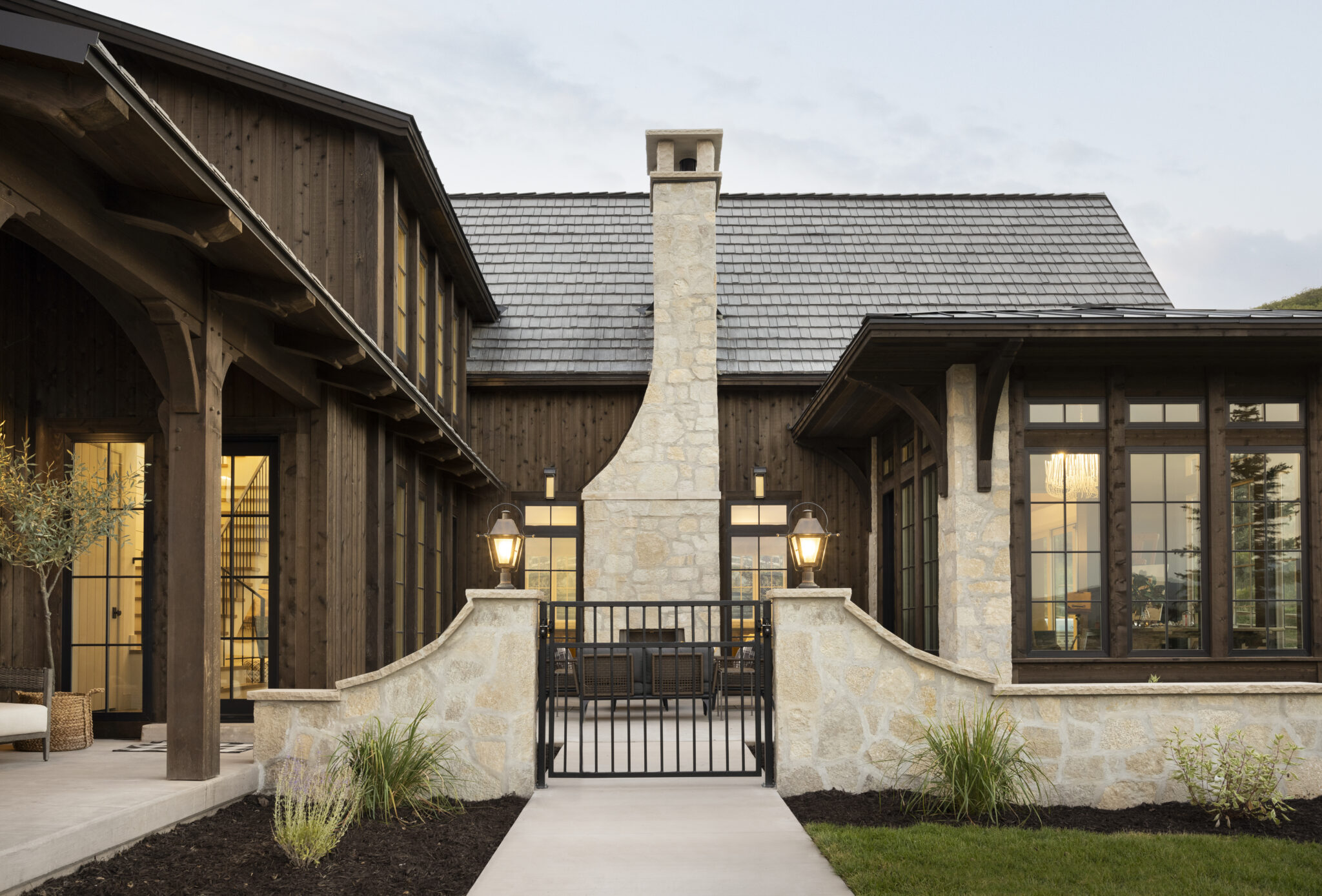
After many hours of immersing herself in the landscape and history, the designer began a search for an exterior material that felt rustic and at one with the land. “I didn’t know exactly what I wanted,” Olsen says. “But when I saw Buechel Stone’s Fond du Lac Webwall, I knew that was it. I envisioned pioneers picking this stone from a field.”
The stone’s irregular shape made it ideal for the rustic farmhouse style she was looking for—and for the build itself. “You can’t really mess it up,” she laughs. “We had the luxury to play with how muddy and how messy we wanted the grout line. It looks like someone dug it up and stuck it on the house—that was the look I wanted.”
Playing off the uneven lines and organic palette of the stone, Olsen paired it with a rich tobacco-colored cedar siding on the exterior. “I was inspired by a nearby cottage,” the designer says of how she chose the wood. “It was important for the exterior to be rough, textural, and authentic, so it would feel like the surrounding barns.”
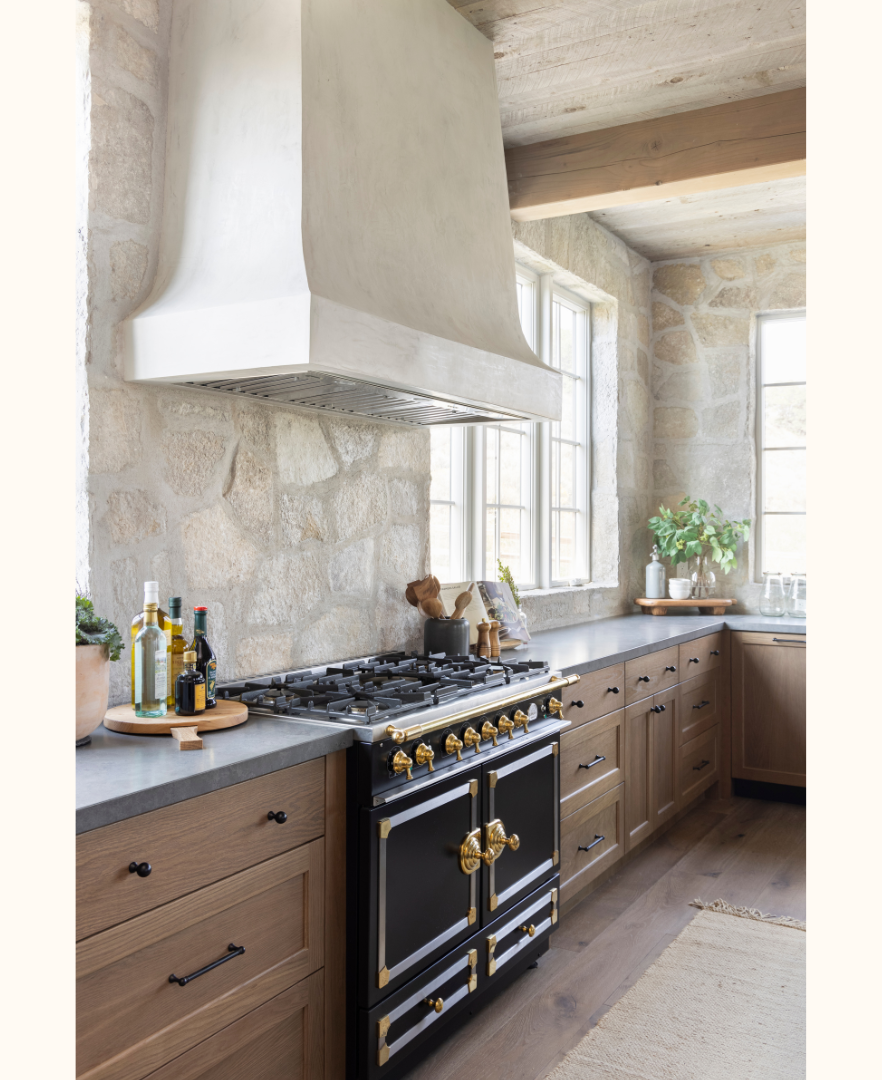
A cohesive, seamless flow from outside to in was especially pertinent. “In all of my projects, I bring my exteriors in and my interiors out,” Olsen notes. She incorporated the Webwall in the primary bedroom’s fireplace, the pantry, and—perhaps most notably—in the kitchen, where she used it prominently on the walls as a strong anchor to the natural wood-beamed ceilings. To keep visual focus on the Webwall, she selected a soapstone-inspired, charcoal-colored quartz for the countertops. “I didn’t want marbles or heavy veining competing with it,” she says.